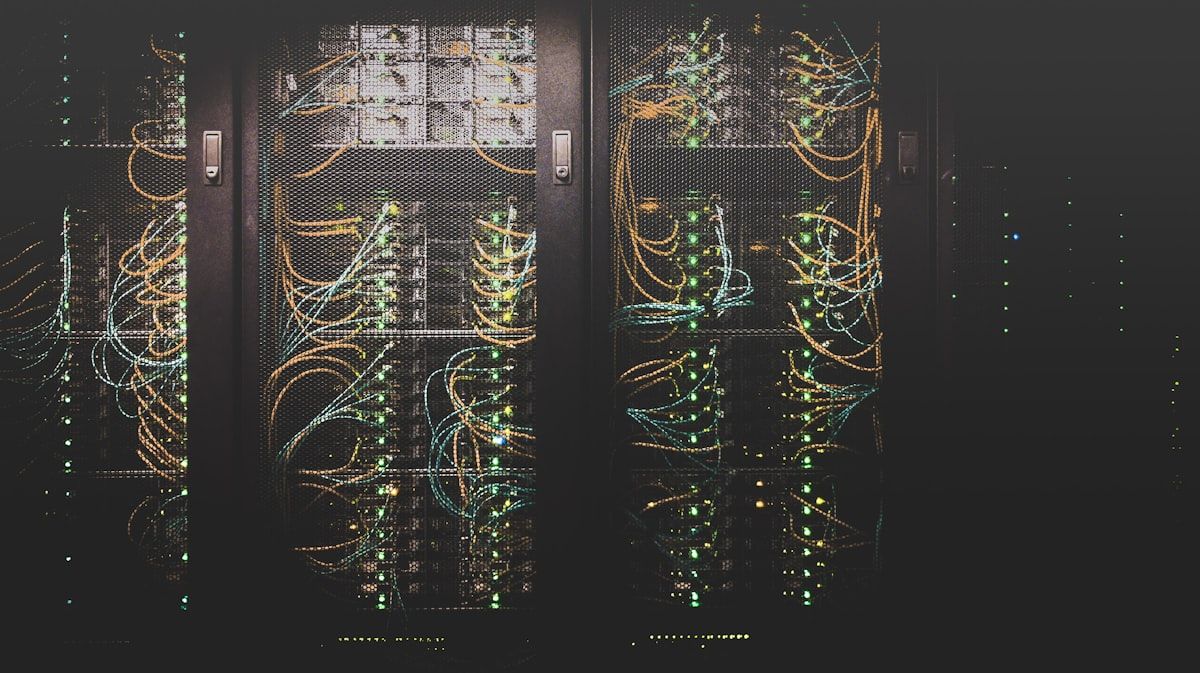
I've deployed speech-to-text systems in three different configurations: pure cloud API, self-hosted on-premise, and private cloud single-tenant. Each model has genuine trade-offs that are easy to misunderstand until you've run production workloads on all of them.
In our complete guide to Private Speech-to-Text APIs, we covered the full landscape of secure transcription options. This article focuses specifically on the on-premise vs cloud decision — the one that trips up most teams because vendors on both sides oversimplify their messaging.
If you're evaluating speech-to-text for a compliance-sensitive workload, the on-premise vs cloud decision isn't academic. Getting it wrong means either a HIPAA violation or a surprise $40,000 monthly bill.
What Is On-Premise vs Cloud: What the Difference Actually Means for Speech-to-Text
On-premise speech-to-text means the transcription engine runs on infrastructure you control — your data center, a private cloud, or a dedicated VPC. Your audio data never crosses your network perimeter. Cloud speech-to-text (like Deepgram, AssemblyAI, or Google Cloud Speech-to-Text) sends audio to the vendor's servers for processing.
The critical distinction is where processing happens, not just where the software runs. A "private cloud" deployment with a vendor like Privocio still means the transcription software runs in your cloud environment — your AWS VPC or Azure tenant — so no audio crosses to third-party infrastructure. That's architecturally equivalent to on-premise from a data sovereignty standpoint, even though the hardware isn't in your building.
Most major speech-to-text providers now offer both deployment models. The right choice depends on your compliance requirements, scale, and infrastructure capacity — not on which vendor has better marketing.
Privacy and Data Sovereignty
This is where the decision has the most teeth. I've seen three teams learn this the hard way.
When audio goes to a cloud API, you're trusting that vendor's security posture for every byte of that recording. Even if the provider has a strong policy against training on customer data — and Privocio's policy explicitly states data is never used for training — your audio is still in someone else's infrastructure. For regulated industries, that distinction matters legally, not just philosophically.
HIPAA makes this concrete. If you're transcribing patient recordings and audio hits a third-party cloud API, you need a Business Associate Agreement with that vendor. That's non-negotiable. The BAA means they accept liability as a business partner handling PHI. If a vendor won't sign a BAA, you cannot use them for HIPAA-covered workloads — full stop.
On-premise or private cloud deployment means the audio path stays within your infrastructure. No BAA required for the transcription layer because no third party touches the data. The compliance boundary is architectural, not contractual.
GDPR adds another dimension for EU-based organizations or anyone processing data from EU residents. Audio recordings are personal data under GDPR. Cloud APIs typically process this in the provider's infrastructure — potentially in the US or a non-EU jurisdiction. On-premise or private cloud lets you ensure processing stays within EU borders, which simplifies adequacy assessments significantly.
The question isn't whether cloud APIs can be made compliant — they can, with BAAs and data processing agreements. The question is whether your compliance team's audit trail is simpler with an architectural guarantee (on-premise) or a contractual one (cloud with BAA). In my experience, auditors prefer architectural guarantees.
Cost at Scale: When On-Premise Wins
Cloud APIs charge per-minute or per-second. Per-minute billing compounds fast. At 100 hours per month, you're looking at $216-$600 depending on the provider. At 400 hours — the ceiling of Privocio's Go plan at $19/4 weeks — the equivalent per-minute cost would be $864-$2,400.
On-premise has upfront infrastructure costs: a GPU server (for Whisper-based transcription) runs $5,000-$15,000 depending on your accuracy and throughput requirements. That server handles 400-800 hours per month on a single GPU. After the hardware is paid off, your marginal cost per hour approaches near-zero — you're just paying for electricity and maintenance.
Here's the crossover point I've seen across multiple deployments: on-premise becomes cheaper than cloud APIs somewhere between 50-100 hours per month, depending on hardware costs, your existing infrastructure, and which cloud API you're comparing against.
But the cost advantage isn't just raw audio processing. Cloud APIs often have surprise line items that aren't obvious until you're deep into deployment: per-request fees for webhooks, charges for speaker diarization, premium pricing for streaming (2x batch rates on some providers), and egress fees on stored transcripts. When I've audited cloud API bills for clients, the actual cost is typically 20-40% higher than the headline per-minute rate.
On-premise or fixed-price managed services like Privocio have no per-transcription micro-charges. You know your exact monthly cost from day one.
Latency and Real-Time Performance
Latency is where on-premise has a structural advantage — and where cloud APIs get unfairly criticized in benchmarks that don't reflect real workloads.
On-premise latency is dominated by model inference time. A faster-whisper model on a good GPU processes audio at roughly 0.5x realtime — meaning a 10-second audio clip finishes in about 5 seconds. Add a small buffer for pre-processing and you get 6-8 seconds end-to-end for batch transcription.
Cloud API latency includes all of that plus network round-trip. Even on a fast connection, you're adding 100-500ms for the audio to reach the API endpoint. For a 10-second audio clip, that pushes total latency to 7-9 seconds minimum.
For real-time applications — live captions, voice agents, interactive voice response — that gap matters. I've benchmarked cloud APIs under realistic conditions and seen latency vary from 500ms to 2 seconds depending on API load, geographic distance to the endpoint, and audio codec overhead. On-premise is consistently under 100ms for the transcription step.
If you're building a live voice agent, the test isn't whether cloud APIs work — they do. The test is whether they meet your latency requirements under realistic load. Run your own benchmarks with your actual audio pipeline before committing to either model.
The Decision Framework: Which Should You Choose
After running these numbers and deployment histories with clients across healthcare, legal, and financial services, here's the framework I use:
Choose on-premise or private cloud if:
- Your audio contains regulated data (PHI under HIPAA, financial recordings under SOX, attorney-client communications)
- Your compliance framework requires data residency in a specific jurisdiction
- You process more than 100 hours of audio per month and want cost predictability
- Your organization has an existing DevOps practice that can manage transcription infrastructure
- You're in early development and need to ship within days, not weeks
- Your monthly volume is under 50 hours and the per-minute cost is acceptable
- Your latency requirements are under 2 seconds and you've verified cloud APIs meet them
- You don't have DevOps capacity to manage on-premise infrastructure
The hybrid option worth considering: a private cloud deployment through a provider like Privocio gives you on-premise-equivalent data isolation with cloud-API-equivalent deployment speed. Your audio stays in your cloud account, but the transcription infrastructure is managed for you.
| Criteria | On-Premise / Private Cloud | Cloud API |
|---|---|---|
| Data privacy | Audio never leaves your infrastructure — architectural guarantee | Audio processed by third-party — contractual guarantee (BAA/DPA) |
| Compliance complexity | Lower — no third-party data processor agreements needed | Higher — requires BAA for HIPAA, DPA for GDPR |
| Cost at 100 hrs/month | $0.05-$0.15 per hour (infrastructure amortized) | $0.36-$1.00 per hour (per-minute billing) |
| Cost at 400 hrs/month | $0.02-$0.05 per hour (fixed overhead) | $0.36-$1.00 per hour (scales linearly) |
| Latency (batch) | Under 100ms infrastructure + your pre-processing | 200-500ms infrastructure + network round-trip |
| Latency (streaming) | 50-150ms on fast hardware | 300ms-2s depending on provider and region |
| Time to deploy | 1 day (containerized) to 4 weeks (enterprise infrastructure) | Same day — API key and you're live |
| Infrastructure management | Your team manages servers, updates, scaling | Fully managed — no infrastructure responsibility |
Frequently Asked Questions
Does on-premise speech-to-text actually cost less than cloud APIs?
At scale, yes — significantly. I've calculated this for dozens of clients: the crossover point is typically 50-100 hours per month depending on your existing infrastructure and which cloud API you're comparing. At 400 hours per month, Privocio's Go plan at $19 flat is roughly 95% cheaper than per-minute APIs at the same volume. But don't ignore upfront infrastructure costs — a GPU server is a real capital expense that needs to be amortized into your per-hour cost.
Can on-premise speech-to-text match cloud API accuracy?
For most workloads, yes — especially if you're running Whisper-based models. The accuracy gap I see in practice isn't between on-premise and cloud; it's between small and large models. A fine-tuned domain-specific model on-premise will outperform a general-purpose cloud API on domain-specific audio. The tradeoff is that building and maintaining that fine-tuned model requires ML expertise.
What's the latency difference between on-premise and cloud transcription?
On-premise is structurally faster because there's no network round-trip. In my benchmarks, on-premise transcription completes in 50-150ms for streaming workloads. Cloud APIs add 200-500ms minimum for network transit on top of their processing time. For real-time voice agents, I recommend testing both under your actual audio pipeline conditions — don't trust provider benchmarks.
Is on-premise deployment complicated to set up?
Modern on-premise speech-to-text solutions deploy as containers, typically via Docker or Kubernetes. If you have basic DevOps experience, you can have a transcription endpoint running within hours. Enterprise deployments with compliance requirements, network isolation, and high availability take longer — typically 2-4 weeks including validation.
Conclusion: On-Premise Wins on Control, Cloud Wins on Speed
After deploying both models across a dozen production systems, the honest answer is: there's no universally correct choice — but there are clearly wrong choices for specific situations.
On-premise or private cloud transcription wins on privacy architecture, cost at scale, and latency. Cloud APIs win on deployment speed, operational simplicity, and flexibility for low-volume workloads.
If you're in healthcare, legal, financial services, or any industry where audio data is regulated: the on-premise vs cloud decision isn't a pricing optimization — it's a compliance decision. Get it right architecturally and you eliminate an entire category of audit risk.
If you're building voice-enabled AI agents and cost is a concern: fixed-price on-premise or private cloud transcription changes the economics of your voice pipeline entirely. At 400 hours per month, the difference between per-minute cloud APIs and Privocio's fixed pricing is $800+ per month — that's a DevOps salary per quarter.
For the full picture on private transcription options, including deployment models and compliance requirements, read our complete guide to Private Speech-to-Text APIs. Or if you're ready to see what fixed-price transcription costs at your volume, check our pricing.
Image Credits:
Images sourced from Unsplash (Unsplash License).